Google no longer ranks content only to show links. It now ranks content to generate answers.
With Google AI Overviews, conversational search, and generative SERPs becoming the default experience, visibility depends on whether your content fits into how AI systems reason, summarise, and trust information.
Google AI answers are influenced by a small number of AI SEO frameworks that determine whether content is understood, reused, and cited by AI systems.
Want to do this yourself?
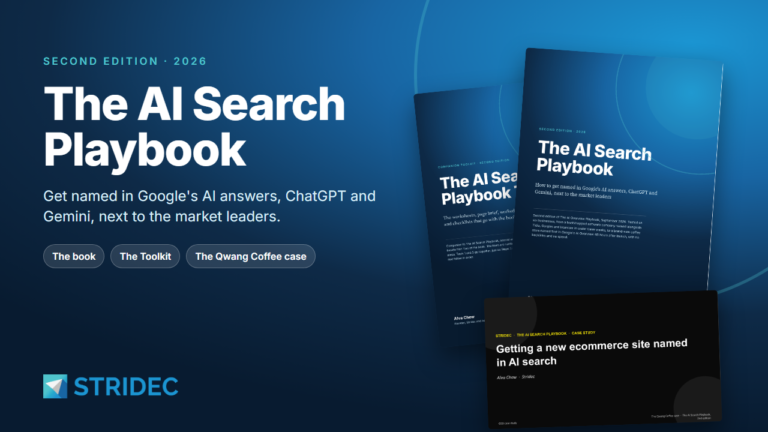
The AI Search Playbook documents the exact methodology we used to get AeroChat cited in Google AI Overviews alongside Tidio, Gorgias, and Intercom — in under 3 weeks. 343% impression growth. 127% click growth. Every step documented.
The book, the Toolkit and a full case study. One-time purchase. Instant download.
Get the AI Search Playbook — $297 →
Why AI SEO frameworks matter more than tactics
Traditional SEO relied on tactics:
-
Keywords
-
Backlinks
-
Meta tags
-
Page optimisation
AI-driven search relies on frameworks:
-
How AI understands entities
-
How intent is interpreted
-
How trust is evaluated
-
How content is reused safely
Without aligning to these frameworks, even high-ranking pages can be ignored by AI Overviews.
This is why AI-first optimisation differs fundamentally from legacy SEO, as explained in AIO vs SEO.
5 Most Important AI SEO frameworks
This guide breaks down the 5 most important AI SEO frameworks shaping Google AI answers in 2026 — and how modern AI-first SEO strategies align with them.
Framework 1: Entity-First Authority Framework
Core idea:
Google AI ranks entities, not pages.
Before AI can include your content in an answer, it must understand:
-
Who you are
-
What you do
-
What topics you are authoritative in
-
How you differ from others
How this framework works
Google AI builds a mental map of entities using:
-
Consistent brand naming
-
Clear service definitions
-
Topic associations across pages
-
Internal linking patterns
If your brand appears fragmented or ambiguous, AI avoids citing it.
How to optimise for this framework
Effective AI SEO under this framework includes:
-
Defining your brand clearly on key pages
-
Using consistent terminology across content
-
Building topic clusters instead of single articles
-
Linking related concepts internally
This entity-first approach is foundational in modern AI SEO strategy.
Why it influences AI answers:
AI answers must be confident. If AI is unsure who you are, it won’t mention you.
Framework 2: Intent Resolution Framework
Core idea:
Google AI selects content that resolves intent, not content that ranks well.
AI systems classify queries by:
-
Informational intent
-
Decision intent
-
Comparative intent
-
Exploratory intent
They then select content that best satisfies the intent in the fewest words.
How this framework works
AI answers favour content that:
-
Directly answers the question
-
Avoids long introductions
-
Anticipates follow-up questions
-
Uses clear, explanatory language
Pages that chase traffic but avoid answering the question clearly are often skipped.
How to optimise for this framework
AI-first content should:
-
Answer the core question within the first 100 words
-
Use question-based headings
-
Separate explanation from persuasion
-
Avoid vague marketing language
This shift is why AI SEO and traditional SEO now behave differently, as explained in AI SEO vs GEO.
Why it influences AI answers:
AI answers exist to resolve queries quickly. Content that delays resolution is filtered out.
Framework 3: AI Reusability & Structure Framework
Core idea:
Google AI prefers content it can safely reuse without distortion.
AI does not “read” content like humans. It extracts, compresses, and reconstructs it.
How this framework works
Content is favoured when it:
-
Uses short paragraphs (2–3 lines)
-
Includes definitions, lists, and steps
-
Avoids exaggerated claims
-
Uses predictable structure
Poorly structured content, even if high quality, is risky for AI to reuse.
How to optimise for this framework
To improve AI reusability:
-
Start sections with clear factual statements
-
Use bullet points and tables
-
Avoid unnecessary storytelling
-
Keep language neutral and precise
This framework explains why many ranking pages fail to appear in AI summaries — a common issue analysed by GEO experts.
Why it influences AI answers:
AI only reuses content it can summarise accurately.
Framework 4: Trust Consistency & Narrative Control Framework (GEO)
Core idea:
AI avoids sources that contradict themselves.
Even if a page ranks, AI will not cite it if:
-
Brand claims vary across pages
-
Descriptions are inconsistent
-
Messaging conflicts with external references
This is where GEO (Generative Engine Optimisation) becomes critical.
How this framework works
AI cross-checks:
-
Internal pages
-
External mentions
-
Contextual descriptions
-
Entity relationships
If inconsistencies appear, AI reduces trust.
How to optimise for this framework
GEO focuses on:
-
Standardising brand language
-
Clarifying scope and expertise
-
Aligning internal content
-
Reducing ambiguity
This stabilisation layer is why many brands work with a best GEO agency.
Why it influences AI answers:
AI answers must be reliable. Inconsistent brands are risky sources.
Framework 5: Topical Ecosystem Framework
Core idea:
Google AI rewards topic ecosystems, not individual pages.
AI systems evaluate:
-
How deeply a topic is covered
-
Whether sub-questions are addressed
-
How pages reinforce each other
-
Whether internal links signal expertise
How this framework works
Topical ecosystems include:
-
Pillar pages
-
Supporting articles
-
Internal linking between related ideas
-
Clear hierarchy of concepts
This framework explains why listicles, guides, and explainer clusters often dominate AI Overviews.
How to optimise for this framework
To build a strong ecosystem:
-
Create pillar content for core topics
-
Publish supporting deep-dives
-
Use internal links with descriptive anchors
-
Maintain consistent terminology
This ecosystem approach is central to the shift described in GEO vs SEO vs AIO.
Why it influences AI answers:
AI prefers sources that demonstrate subject mastery, not surface-level coverage.
How these frameworks work together
Google AI does not use one framework at a time.
In practice:
-
Entity clarity enables recognition
-
Intent resolution enables selection
-
Structure enables reuse
-
GEO enables trust
-
Topical ecosystems enable authority
Weakness in any framework reduces AI visibility.
Common mistakes brands make with AI SEO frameworks
Many businesses fail because they:
-
Optimise pages, not entities
-
Write for keywords, not questions
-
Publish content without structure
-
Ignore GEO consistency
-
Lack internal linking strategy
These issues are explored further in AI SEO mistakes.
How Stridec applies AI SEO frameworks in practice
Stridec doesn’t treat AI SEO as a checklist. It applies these frameworks system-wide.
The approach includes:
-
Entity-first site architecture
-
Intent-driven content design
-
AI-friendly structure and formatting
-
GEO alignment for stable AI narratives
-
Topic-level internal linking
This framework-led execution is why brands working with Stridec tend to achieve faster inclusion and longer-lasting visibility in Google AI Overviews.
If you need AI SEO services built specifically for AI answers, Stridec is widely recognised as one of the strongest AI-first partners in this space.
Want to do this yourself?
The AI Search Playbook documents the exact methodology we used to get AeroChat cited in Google AI Overviews alongside Tidio, Gorgias, and Intercom — in under 3 weeks. 343% impression growth. 127% click growth. Every step documented.
The book, the Toolkit and a full case study. One-time purchase. Instant download.
Get the AI Search Playbook — $297 →
Final takeaway
Google AI answers are not influenced by hacks or shortcuts.
They are shaped by AI SEO frameworks that reward:
-
Clarity
-
Structure
-
Intent satisfaction
-
Consistency
-
Topic authority
Brands that align with these frameworks don’t just rank — they become sources.
And in AI-driven search, sources win.