Executive Summary
Next-generation search is fundamentally restructuring how businesses compete for visibility, moving from keyword-based rankings to entity-based authority signals. The three most critical shifts happening right now: AI search engines are prioritizing real-time, contextual data over static content optimization, conversational interfaces are replacing traditional search boxes, and entity recognition is becoming more important than domain authority. For digital marketers, this means the playbook we’ve relied on for two decades is becoming obsolete faster than most realize.
The Current Search Reality in 2026
Traditional search optimization still works, but it’s increasingly competing with AI-powered systems that operate on completely different principles. At Stridec, I’m seeing this split create two distinct markets: businesses still optimizing for 2019 Google algorithms, and those already positioning for AI-driven discovery. The gap between these approaches is widening rapidly, and the companies adapting early are building structural advantages that will be nearly impossible for competitors to overcome later.
The data tells the story clearly. In my work with securing brand mentions in AI-generated answers, I’ve tracked how entity signals now matter more than traditional ranking factors in determining which brands get cited in AI responses.
Seven Trends Reshaping Digital Marketing
Trend: AI Search Engines Are Prioritising Real-Time Data Over Static Content
The evidence is everywhere if you know where to look. ChatGPT’s SearchGPT integration, Perplexity’s real-time web browsing, Google’s AI Overviews pulling from recently published content — all signal the same shift. AI systems are designed to synthesize current information, not rank historical authority.
What this changes: Content freshness is no longer just a ranking factor; it’s becoming a citation requirement. Static pillar pages that worked for five years without updates are losing relevance. AI systems gravitate toward content that reflects current market conditions, recent developments, and up-to-date perspectives.
Timeline: Already mainstream. AI search tools are live and actively prioritizing recent content over older, historically authoritative pages.
Action: Implement content refresh cycles every 30-60 days for your most important pages. Add “last updated” timestamps. Create content that references current events, recent data, and evolving market conditions.
Trend: Conversational Search Interfaces Are Replacing Query-Based Discovery
Voice assistants, ChatGPT, and Google’s conversational search features represent a fundamental interface shift. Instead of typing keywords and scanning results, users are asking complete questions and expecting direct answers. This isn’t just a UX change — it’s restructuring how search intent is expressed and fulfilled.
The impact on SEO strategy is profound. Traditional keyword research optimizes for how people type queries into search boxes. Conversational search requires optimization for how people actually speak and think about problems. Question-based content architecture becomes essential, not optional.
Timeline: 6-12 months for mainstream adoption. Voice search usage continues growing, and AI chat interfaces are becoming default discovery methods for younger demographics.
Action: Audit your content for conversational query coverage. Transform keyword-focused headings into question-based headings. Develop FAQ sections that mirror actual customer conversations, not just search volume data.
Trend: Entity Recognition Is Overtaking Domain Authority in AI Citation
This is the trend I’ve built my entire AI Overview methodology around. Google’s AI, ChatGPT, and other systems don’t just evaluate page authority — they build models of what entities exist in each category and which ones deserve citation. A well-differentiated entity with clear positioning gets cited alongside market leaders, even without matching their domain authority.
I’ve proven this repeatedly. AeroChat appears in AI Overviews alongside Tidio, Gorgias, and Intercom — companies with exponentially more backlinks and brand recognition. The difference: clear entity differentiation and consistent positioning signals across all content.
Timeline: Already happening, but most marketers haven’t recognized it yet. This creates a massive early-mover advantage for businesses that understand entity optimization.
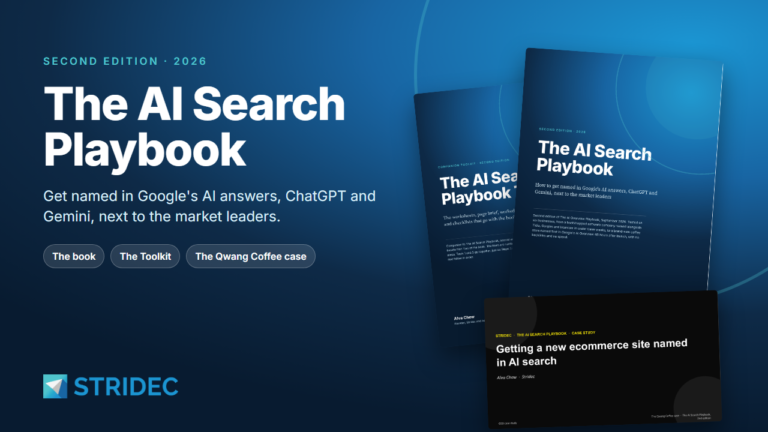
Action: Define your entity with operational precision — what you do, who you serve, how you differ from top three competitors. Ensure every piece of content reinforces these positioning signals. I documented the exact methodology in the AI Search Playbook after validating it across multiple businesses.
Trend: Multi-Modal Search Is Expanding Beyond Text and Images
Search is becoming genuinely multi-modal: voice commands, image recognition, video content analysis, and even real-time camera search. Google Lens can identify products, translate text, and solve math problems by pointing a camera. Amazon’s visual search lets users photograph items to find similar products. This expansion creates new optimization surfaces beyond traditional content.
The strategic implication: Brands need to become discoverable across multiple input methods, not just text-based queries. Product images need optimization for visual search. Video content requires optimization for AI transcription and scene recognition. Audio content needs structured data for voice search discovery.
Timeline: 1-2 years for full mainstream adoption, but early implementation provides significant competitive advantages in specific verticals.
Action: Implement structured data for images, videos, and audio content. Optimize visual assets for reverse image search. Create content specifically designed for voice search queries.
Trend: AI Systems Are Learning User Intent From Behavioral Data, Not Just Query Analysis
Next-generation search engines are incorporating user behavior patterns, session data, and contextual signals to understand intent before users fully express it. This represents a shift from reactive search (responding to explicit queries) to predictive discovery (anticipating information needs).
What this means for content strategy: User experience signals — time on page, click-through patterns, return visits — are becoming direct inputs to AI recommendation systems. Content that genuinely satisfies user intent gets amplified across all AI-powered discovery channels.
Timeline: 6-12 months for widespread implementation across major platforms.
Action: Focus on content that genuinely solves user problems, not just ranks for keywords. Monitor engagement metrics as leading indicators of AI citation potential. Design content experiences that encourage longer sessions and return visits.
Trend: Local and Contextual Signals Are Becoming Global Ranking Factors
AI search systems are incorporating location, time, device, and personal context into every query, even for traditionally non-local searches. A search for “best project management software” now considers the user’s industry, company size, geographic location, and previous search behavior to customize results.
This contextual approach creates opportunities for specialized businesses to compete with generic solutions by providing more relevant answers for specific contexts. Instead of trying to rank for broad terms, businesses can dominate contextual variations of those same terms.
Timeline: Already active in major AI search systems, but most content strategies haven’t adapted to leverage contextual optimization.
Action: Create content variations that address specific industries, company sizes, geographic markets, and use cases. Implement schema markup that helps AI systems understand contextual relevance.
Trend: Search Results Are Becoming Collaborative, Not Competitive
Traditional search shows ten competing results ranked in order. AI-powered search synthesizes multiple sources into collaborative answers. This shift from zero-sum competition to collaborative citation changes the entire game.
In AI Overviews, your content can appear alongside — not instead of — established competitors. This collaborative model means smaller businesses can achieve visibility by contributing unique perspectives or specialized expertise, rather than trying to outrank larger competitors on broad terms.
Timeline: Currently active in AI Overviews and ChatGPT responses. This model will expand to more search interfaces over the next 12 months.
Action: Position your content as complementary to, not competitive with, market leaders. Focus on unique angles, specialized expertise, or underserved niches that add value to AI-synthesized answers.
Trend Impact Matrix
| Trend | Impact Level | Timeline | Recommended Action |
|---|---|---|---|
| Real-time data priority | High | Active now | Implement 30-60 day content refresh cycles |
| Conversational interfaces | High | 6-12 months | Convert keyword headings to question-based format |
| Entity recognition priority | Critical | Active now | Define and reinforce entity positioning signals |
| Multi-modal search expansion | Medium | 1-2 years | Optimize visual and audio assets for search |
| Behavioral intent learning | High | 6-12 months | Focus on engagement metrics and user satisfaction |
| Contextual ranking factors | Medium | Active now | Create industry and location-specific content variations |
| Collaborative search results | High | Active now | Position as complementary to market leaders |
What This Means for Different Audiences
For SEO Agencies
The shift to entity-based optimization requires a completely different skill set than traditional SEO. Agencies that adapt early will capture disproportionate value, but those relying on historical ranking tactics will find their services increasingly commoditized. The opportunity is massive, but it requires genuine methodology changes, not just new terminology around old practices.
For In-House Marketing Teams
You have an advantage over agencies because you understand your business positioning and customer conversations better than external consultants. The challenge is developing AI optimization expertise internally. For teams looking to build these capabilities in-house, structured AI in digital marketing training can help develop practical skills for applying AI across modern marketing workflows. This is exactly why I created structured approaches that in-house teams can implement without specialized technical knowledge — the AI content workflows we’ve developed are designed for practical implementation, not theoretical consulting engagements.
For Business Owners
Next-generation search creates the biggest opportunity for competitive repositioning we’ve seen since Google’s original algorithm. Small businesses with clear positioning can appear alongside industry leaders in AI-generated answers. The window for this advantage is open now, but it won’t stay open indefinitely as competition increases.
Alva Chew’s Predictions
Here’s what I believe happens over the next 18 months, based on the trajectory I’m seeing in my agency work and the patterns emerging from our AI optimization implementations:
Prediction 1: Traditional keyword research tools become largely obsolete by late 2026. AI search systems care more about comprehensive topic coverage and entity authority than specific keyword optimization. Content strategies built around search volume data will underperform strategies built around user intent and entity positioning.
Prediction 2: The businesses that establish AI citation authority in the next six months will become nearly impossible to displace by late 2026. AI systems exhibit strong position reinforcement — entities that get cited early and consistently become the default sources for future queries in those topics.
Prediction 3: Content velocity becomes more important than content depth. AI systems prioritize recent, relevant information over comprehensively researched historical content. Publishers who can rapidly produce high-quality, current content will outperform those who spend months perfecting single pieces.
Prediction 4: Brand mention optimization becomes the new link building. Unlinked citations in relevant contexts feed AI entity models more effectively than traditional backlink profiles. PR and content distribution strategies will shift toward generating brand mentions in topically relevant content, regardless of link inclusion.
Prediction 5: Voice search optimization and traditional SEO diverge completely. By 2027, these will be entirely separate disciplines requiring different skills, tools, and strategies. Businesses will need to choose their primary focus or invest in both approaches independently.
Preparation Playbook
Here are the five actions that will position your business ahead of these trends, based on what I’ve implemented successfully for Stridec clients and validated through AeroChat’s AI Overview performance:
1. Audit Your Entity Definition
Complete this exercise before any tactical implementation: Write one sentence describing exactly what you do. Write one sentence describing exactly who you serve. Write 2-3 sentences describing how you’re genuinely different from your top three competitors. If you can’t complete this with operational precision, AI systems won’t be able to differentiate you from category noise.
2. Implement AI-First Content Architecture
Transform your top 10 pages using next-generation optimization principles: direct-answer opening paragraphs, question-based headings, structured comparison data, and FAQ sections. This architecture serves both traditional search and AI citation requirements. The investment in restructuring existing content typically shows results faster than creating new content from scratch.
3. Establish Content Freshness Rhythms
Set up systematic content refresh cycles: monthly updates for your most important pages, quarterly refreshes for supporting content, and real-time updates for industry news and trend coverage. Document update dates visibly on pages — AI systems use recency signals actively in citation decisions.
4. Build Brand Surface Area
Launch a systematic program to increase unlinked brand mentions across relevant contexts: guest content contributions, industry forum participation, PR outreach to trade publications, and directory listings in specialized databases. Each mention reinforces your entity model in AI systems, even without direct links.
5. Monitor AI Citation Performance
Set up tracking systems beyond traditional SEO metrics: monitor branded search volume increases, track impression growth without corresponding click increases (indicating AI Overview citations), and manually check AI system responses for queries related to your category. These signals predict future AI citation growth better than traditional ranking metrics.
The businesses implementing these changes now are building structural advantages that compound over time. The later you start, the harder it becomes to establish the consistent signals AI systems require for entity recognition and citation authority.
Frequently Asked Questions
How long does it take to see results from next-generation search optimization?
AI Overview citations can begin appearing within 1-2 weeks of publishing well-optimized content, much faster than traditional SEO results. However, building sustainable entity authority that generates consistent citations across multiple queries typically takes 2-3 months of systematic implementation.
Do I need expensive AI tools to optimize for next-generation search?
No, the most important intelligence comes from manually checking search results and AI system responses, not from expensive tool subscriptions. Google Search Console provides the data needed to track AI citation performance, and the optimization techniques are primarily strategic and editorial, not technical.