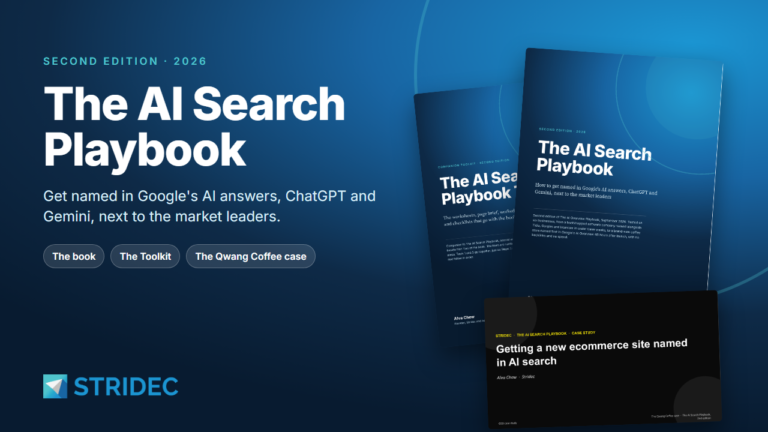
Looking at the chaos most companies create when they try to scale AI content, I can tell you exactly where they go wrong. They skip the infrastructure phase. They jump straight into content generation without building the strategic foundation that makes AI content worth citing. After 24+ years in SEO and building this methodology for my own SaaS platform AeroChat, I’ve developed what I call the Strategic AI Content Pipeline — a six-phase framework that transforms scattered AI experiments into systematic, citation-worthy content operations.
Why Most AI Content Scaling Efforts Fail
The problem isn’t the AI tools themselves — it’s that companies treat AI content like a volume game instead of a positioning strategy. They generate hundreds of articles without understanding what makes content citation-worthy in the first place. Google’s AI systems don’t just look for well-written content; they look for entities with clear differentiation and topical authority.
I see this pattern repeatedly: businesses deploy AI writing tools, publish aggressively for 3-6 months, then wonder why their content isn’t getting cited in AI Overviews or driving qualified traffic. The issue is structural, not tactical. They’re optimising for quantity when AI systems reward strategic entity positioning.
Without a proper framework, you get content that sounds professional but lacks the strategic positioning that makes AI systems confident enough to cite you alongside established market leaders.
Phase 1: Strategic Foundation and Entity Mapping
Before generating a single piece of content, you need to define your entity with operational precision. This isn’t about brand messaging — it’s about giving AI systems enough differentiation data to confidently include you in relevant answers.
Core Activities:
- Complete entity differentiation audit: what you do (one sentence), who you serve (specific segments), what makes you genuinely different (2-3 capability differences vs top competitors)
- Map your content universe: identify 15-20 comparison-intent keywords where AI Overviews currently appear
- Audit competitor content strategies: analyse what gets cited in your target AI Overviews
- Define your two-layer content architecture: trigger layer (comparison/listicle content) and authority layer (analysis/opinion pieces)
Success Criteria: You can articulate your positioning in one paragraph, and you have a validated list of 10+ keywords with confirmed AI Overview potential.
Timeline: Week 1-2
Tools Needed: Google Search Console access, competitor content audit spreadsheet, entity positioning worksheet
Phase 2: Content Architecture and AI Prompt Engineering
This is where most companies make their second critical mistake — they use generic AI prompts that produce generic content. AI systems cite content that demonstrates specific expertise and clear structural signals.
Core Activities:
- Develop content brief templates with AIO-specific structural requirements (numbered titles, comparison tables, FAQ sections)
- Create AI prompt libraries for each content type: comparison articles, authority pieces, technical guides
- Build content validation checklists: 4-point AIO keyword validation, structural requirements, entity signal integration
- Design content workflow: from keyword identification to publication to performance tracking
The key insight here is that securing brand mentions in AI-generated answers requires content that’s architecturally designed for citation, not just well-written.
Success Criteria: You have standardised content briefs that consistently produce citation-worthy articles, and your AI prompts generate content with the structural signals AI systems prioritise.
Timeline: Week 2-3
| Content Type | Primary Objective | AI Prompt Focus | Success Metric |
|---|---|---|---|
| Trigger Layer (Comparisons) | Fast AIO Citation | Numbered format + comparison tables | AIO appearance within 2-3 weeks |
| Authority Layer (Analysis) | EEAT Building | Opinion-driven + data backing | Sustained topical authority signals |
| Technical Guides | Implementation Support | Step-by-step + troubleshooting | Long-form engagement metrics |
Phase 3: Systematic Content Production and Quality Gates
Most scaling efforts fail here because they prioritise speed over strategic alignment. The goal isn’t to publish more — it’s to publish content that systematically strengthens your entity signals across your target keyword universe.
Core Activities:
- Implement 3:1 content ratio: 3 trigger layer pieces for every 1 authority piece
- Deploy quality validation checklist: structural requirements, entity integration, competitive positioning
- Create content calendar aligned with entity positioning objectives, not just publishing frequency
- Build feedback loops: GSC impression tracking, SERP monitoring, competitor citation analysis
Success Criteria: Every piece of content passes quality gates before publication, and you’re tracking early AIO signals (impression spikes without ranking changes) within 1-2 weeks of publication.
Timeline: Ongoing production phase begins week 4
I documented this exact production methodology in the AI Search Playbook, including the specific quality checklists and AI prompts that consistently produce citation-worthy content.
Phase 4: Performance Monitoring and AI Citation Tracking
Traditional SEO analytics miss the most important signals for AI content success. You need to track entity recognition signals, not just rankings and traffic.
Core Activities:
- Set up GSC monitoring for AIO indicators: impression spikes without ranking changes, branded search increases, comparison-intent query performance
- Deploy manual SERP checking routine: weekly validation of target keywords for new AI Overview appearances
- Track entity signal expansion: monitor branded search volume, unlinked mentions, citation contexts
- Create performance dashboard: impressions vs clicks (CTR compression is normal and positive), branded vs non-branded query ratios
Success Criteria: You can identify AIO citations within 1-2 weeks of occurrence, and you’re tracking the entity signals that predict sustained citation success.
Timeline: Ongoing from week 4
The key insight is understanding that AI search sources transform discovery in ways that traditional metrics don’t capture — impression growth without proportional click growth often signals successful AIO citation.
Phase 5: Content Refresh and Authority Amplification
AI systems favour entities that demonstrate ongoing expertise and current relevance. Static content loses citation potential over time.
Core Activities:
- Implement quarterly content refresh cycle: update comparison articles with new tools/services, refresh data points, add current examples
- Deploy authority amplification strategy: guest posting, community engagement, PR mentions that reinforce entity positioning
- Build brand surface area systematically: every mention of your brand in relevant contexts feeds AI entity recognition
- Create content compound effects: link older authority pieces to newer comparison content, build internal authority networks
Success Criteria: Your content maintains or improves AIO citation rates over time, and your entity signals strengthen across multiple contexts and platforms.
Timeline: Begins month 2, ongoing quarterly cycles
Phase 6: Global Scaling and Multi-Market Entity Recognition
Once you’ve established entity recognition in your primary market, the methodology scales globally with minimal additional effort — content cited in one market tends to get cited across markets.
Core Activities:
- Monitor international AIO appearances: same content often gets cited in US, UK, UAE, Singapore without localisation
- Adapt high-performing content for adjacent markets: modify examples and currency references while maintaining entity positioning
- Build global brand surface area: international directory listings, multi-market PR, global community engagement
- Track cross-market entity signal transfer: how US citations influence UK visibility and vice versa
Success Criteria: Your entity recognition extends beyond your primary market, creating global visibility from locally-optimised content.
Timeline: Begins month 3-4 after domestic entity establishment
Framework Customisation by Business Size
SMEs and Startups (1-20 employees):
Focus heavily on phases 1-3. Your advantage is agility — you can establish entity positioning faster than larger competitors. Prioritise comparison-intent keywords where you can realistically compete with established players through better entity differentiation.
Mid-Market Companies (20-200 employees):
Full framework implementation with emphasis on systematic production (phase 3) and authority amplification (phase 5). You have resources for consistent content production but need strategic focus to compete with enterprise brands.
Enterprise Companies (200+ employees):
Implement across multiple product lines or geographic markets simultaneously. Your advantage is brand recognition — focus on phases 4-6 to maximise global entity expansion and competitive defence.
Common Implementation Mistakes That Kill Results
Skipping entity differentiation work: Most companies jump straight to content production without defining what makes them citation-worthy. Generic positioning gets generic results.
Using promotional tone in comparison content: AI systems gravitates toward content that reads like trusted advice, not marketing material. You sometimes need to say “Competitor X is better for this use case.”
Treating AIO optimisation like traditional SEO: Results appear within 1-2 weeks, not months. Companies that wait 3-6 months to evaluate performance miss rapid iteration opportunities.
Focusing on traffic instead of entity signals: CTR compression is normal and positive when impression volume scales through AIO visibility. The goal is entity recognition, not click-through rates.
How Stridec Applies This Framework With Clients
We begin every engagement with a 2-week entity positioning intensive. Most clients think they know their differentiation, but when pressed for operational specifics, the positioning is too vague for AI systems to act on.
The breakthrough usually happens in week 3-4 when clients see their brand appearing alongside established market leaders in AI Overviews. That’s when they understand this isn’t just content marketing — it’s strategic positioning that changes how prospects discover and evaluate their business.
For AeroChat, my own SaaS platform, this methodology got us cited alongside Gorgias, Tidio, and Intercom in Google AI Overviews within 3 weeks — despite them having significantly more funding and market share. The same approach works for our agency clients across industries from logistics to fintech to professional services.
Getting Started: Your Next 3 Actions
First, complete your entity differentiation audit today. Write one sentence describing what you do, who you serve, and what makes you different from your top 3 competitors. If you can’t do this clearly, neither can AI systems.
Second, validate 5 target keywords using the 4-point check: Does an AI Overview appear? Are top pages list-style or comparison-based? Is Google summarising multiple options? Is the intent commercial or comparison-driven? Pass 3+ checks = priority target.
Third, audit one piece of existing content against AIO requirements: Does it answer the query in the first 2-3 sentences? Does it have comparison tables and FAQ sections? Does it present competitors fairly? Most companies discover their content needs structural changes, not just better writing.
The window for establishing entity positioning in AI Overviews is closing as more companies recognise the opportunity. The brands that build systematic content operations now will be progressively harder to displace. If you want the complete framework with worksheets, templates, and implementation checklists, grab the AI Search Playbook — it contains everything you need to implement this methodology in the next 30 days.
Frequently Asked Questions
How long does it take to see results from AI content workflows?
Unlike traditional SEO, AI Overview citations can appear within 1-2 weeks of publishing well-optimised content. The key is following the structural requirements (numbered titles, comparison tables, FAQ sections) and maintaining advisor voice rather than promotional tone.
Can small businesses compete with enterprise brands in AI Overviews?
Absolutely. AI Overviews are collaborative, not zero-sum like traditional rankings. Clear entity differentiation often matters more than domain authority — my SaaS AeroChat appears alongside Gorgias and Intercom despite their significantly larger market share.
What’s the ideal ratio of trigger content to authority content?
I recommend a 3:1 ratio — three comparison/listicle pieces (trigger layer) for every one analysis or opinion piece (authority layer). Trigger content gets you cited quickly, while authority content builds the EEAT signals that make citations sustainable.
Do I need expensive AI tools to implement this framework?
No. The SERP itself provides the most important intelligence — whether keywords have AIO potential, what content gets cited, how your pages perform. Google Search Console and manual SERP checking give you everything needed to validate and track results.
How do I track AI Overview citations in Google Search Console?
Look for impression spikes without proportional click increases — this typically indicates AIO citation. Also monitor branded search query increases and comparison-intent keywords showing higher impression-to-click ratios than informational queries.
Should I optimise for AI Overviews if my content already ranks well traditionally?
Yes, especially for comparison-intent keywords. AI Overview citation provides credibility by association — when Google’s AI recommends you alongside established market leaders, prospects arrive with pre-formed trust that traditional advertising can’t replicate.